StarCraft II: Wings of Liberty! Who doesn’t remember those late nights spent building up our bases, desperately trying to outwit the Zerg rush, or mastering the Terran bio-ball?
This game, a true classic, still holds a special place in the hearts of many RTS fans. But let’s be honest, even seasoned players occasionally need a refresher or some advanced strategies to truly dominate the ladder.
The metagame evolves, new builds emerge, and suddenly that tried-and-true tactic just isn’t cutting it anymore. Plus, with the ongoing relevance of AI in gaming, mastering strategy has never been more critical.
Let’s dive in for a closer look below!
Alright, let’s amp up those StarCraft II skills!
Mastering Early Game Macro for Economic Domination
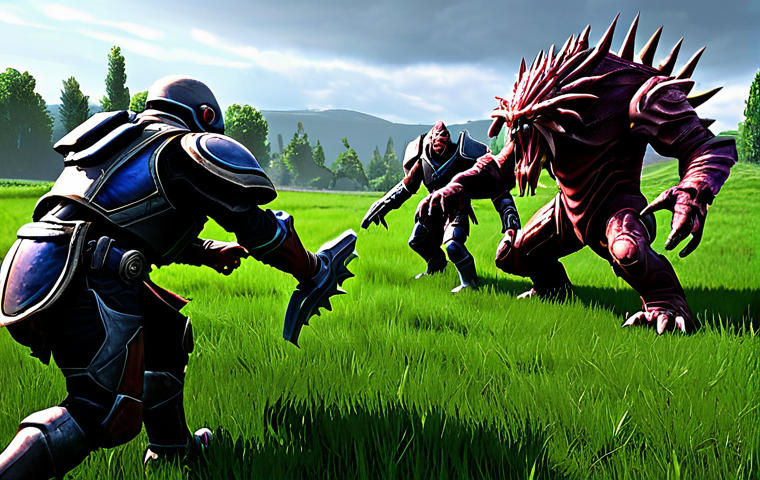
The early game in StarCraft II is all about setting the foundation for your mid and late-game success. It’s a delicate balance between scouting, expanding, and building your initial army.
Neglecting any one of these can spell disaster. I remember countless games where I thought I had a solid early build, only to be crushed by a well-timed aggression.
I learned the hard way that consistent worker production, timely expansions, and smart scouting are non-negotiable. It’s not just about hitting your supply cap; it’s about creating a sustainable economic engine that allows you to outproduce your opponent in the long run.
Don’t be afraid to experiment with different build orders, but always prioritize these core principles. I have personally seen how mastering early game macro can significantly increase win rates, even against opponents with superior micro.
Optimizing Worker Production
Consistent worker production is the lifeblood of your economy. Aim to saturate your mineral lines as quickly as possible and expand to new bases when you have the income to support them.
Don’t let your Command Center (or Hatchery/Nexus) sit idle. Think of it like this: every second you’re not producing workers, you’re falling behind. I once played a game where I got distracted and forgot to build workers for a crucial minute.
That one minute cost me the game. Now, I set alarms to remind myself! Moreover, consider the type of worker you are making.
For example, with Zerg, remember to constantly make Drones so you can make Overlords and don’t get supply blocked.
Scouting and Responding to Early Aggression
Early scouting is crucial to identifying your opponent’s strategy and responding accordingly. Use your initial scouting units to gather as much information as possible about their base.
What tech are they building? How many workers do they have? Are they planning an early attack?
If you see signs of aggression, be prepared to defend. Build bunkers, spine crawlers, or shield batteries to protect your base. Delaying the aggression can buy you time to build up your own forces and counter-attack.
I remember one game where I scouted a Terran player going for a fast Reaper rush. By quickly building a few bunkers and focusing on Marine production, I was able to hold off the attack and transition into a strong mid-game.
Early Expansion Timing
Expanding early is a risky but potentially rewarding strategy. It allows you to secure more resources and outproduce your opponent, but it also makes you vulnerable to early attacks.
Knowing when to expand is key. If you see your opponent is focusing on a greedy build, expanding can be a good option. However, if they are planning an early attack, you may need to delay your expansion and focus on defense.
I once saw a pro player execute a perfect early expansion against a Zerg player who was heavily focused on droning. The Terran player was able to secure a significant economic lead and eventually win the game.
Advanced Micro Techniques for Combat Efficiency
Micro, or micromanagement, is the art of controlling your units in combat to maximize their effectiveness. It’s not enough to just throw your army at the enemy; you need to be able to position your units, focus fire, and use their abilities effectively.
Good micro can make the difference between a crushing defeat and a glorious victory. I’ve seen games where players with inferior armies have won simply because they were able to outmaneuver and outmicro their opponents.
It takes practice, but mastering micro techniques is well worth the effort. It’s about understanding the strengths and weaknesses of each unit and using them to their full potential.
Stutter-Stepping and Hit-and-Run Tactics
Stutter-stepping involves moving your units in between attacks to maximize their damage output and minimize the damage they take. This is particularly effective with ranged units like Marines and Hydralisks.
By constantly moving and firing, you can kite your opponents and keep them at a distance. Hit-and-run tactics are similar, but they involve using fast units to harass your opponent’s base or army and then retreating before they can be caught.
This is a great way to disrupt your opponent’s economy or force them to divert resources to defense. I once saw a player use Mutalisks to constantly harass a Terran player’s mineral lines, forcing them to pull SCVs and lose valuable mining time.
Focus Firing and Prioritizing Targets
Focus firing involves concentrating your fire on a single target to eliminate it quickly. This is particularly effective against high-value units like Siege Tanks or Colossi.
By focusing fire, you can remove these units from the battlefield before they can deal too much damage. Prioritizing targets is also important. Focus on eliminating the units that pose the greatest threat to your army.
For example, if you’re fighting against a Protoss army, focus on taking out the Colossi first. I remember a game where I was fighting against a Terran player who had a large number of Siege Tanks.
By focusing fire on the Tanks with my Vikings, I was able to eliminate them quickly and win the battle.
Utilizing Unit Abilities Effectively
Each unit in StarCraft II has its own unique abilities that can be used to gain an advantage in combat. For example, the Marine has the Stimpack ability, which increases its attack speed and movement speed at the cost of health.
The Ghost has the EMP Round ability, which disables enemy shields and energy. Knowing how to use these abilities effectively can make a big difference in battle.
I’ve seen games where players have won simply because they were able to use their unit abilities at the right time. Think of the iconic Ghost EMP + Viking combo, or the Sentry’s forcefield ability.
Strategic Tech Choices and Countering Opponent Compositions
Choosing the right tech and countering your opponent’s unit composition is crucial for success in StarCraft II. It’s not enough to just build the same units every game; you need to be able to adapt to your opponent’s strategy and build units that are effective against their army.
This requires a deep understanding of the game’s unit interactions and the ability to anticipate your opponent’s moves. I’ve spent countless hours studying replays and analyzing different unit compositions to learn how to counter them effectively.
Understanding Unit Matchups and Counters
Each unit in StarCraft II has strengths and weaknesses against other units. For example, Marines are effective against Zerglings, but they are vulnerable to Banelings.
Knowing these unit matchups is essential for building an effective army composition. A general rule of thumb is to consider which units are armored and which are light, then choose accordingly.
Also, be prepared to change your unit compositions as the game goes on. Maybe your opponent starts with a heavy focus on ground units, so you start making air units to counter them.
Adapting to Your Opponent’s Tech Choices
Your opponent’s tech choices will dictate the units they are able to build. If they are going for a fast tech to air units, you will need to build units that can counter air, such as Vikings or Corrupters.
If they are going for a heavy ground composition, you will need to build units that can deal with ground, such as Siege Tanks or Colossi. Scouting is key to understanding your opponent’s tech choices and adapting accordingly.
Don’t be afraid to switch up your build order if you see your opponent is going for something unexpected.
Transitioning Between Unit Compositions
Knowing when to transition between unit compositions is crucial for staying ahead of your opponent. If your current unit composition is no longer effective against your opponent’s army, you need to be able to switch to a different composition that is more effective.
This requires a good understanding of the game’s economy and the ability to manage your resources effectively. Don’t get stuck in a rut building the same units over and over again.
Be flexible and adaptable, and be prepared to change your strategy on the fly.
Optimizing Hotkey Usage and Keyboard Shortcuts
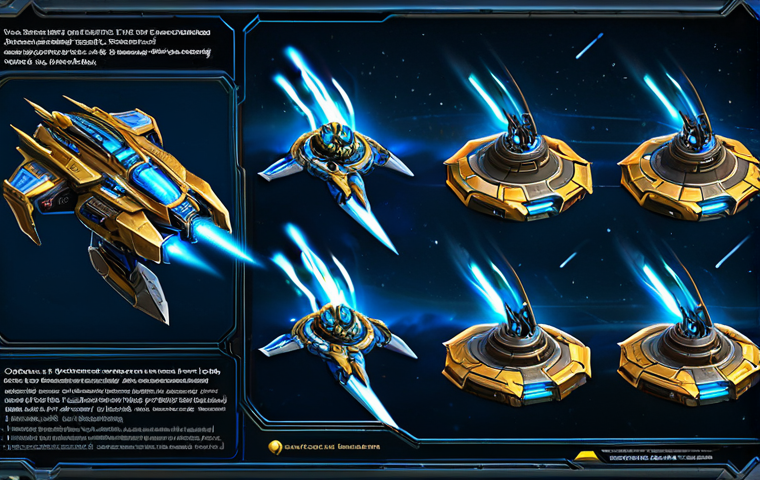
Efficient hotkey usage and keyboard shortcuts are essential for improving your APM (actions per minute) and executing commands quickly and accurately.
This can be the difference between winning and losing a game, especially in high-level play. Mastering hotkeys takes time and practice, but it’s well worth the effort.
I remember when I first started playing StarCraft II, I would click on everything with my mouse. My APM was abysmal, and I struggled to keep up with my opponents.
Once I started using hotkeys, my APM skyrocketed, and I was able to execute commands much faster and more efficiently.
Customizing Hotkeys for Efficiency
StarCraft II allows you to customize your hotkeys to suit your personal preferences. Experiment with different hotkey layouts to find one that works best for you.
Some players prefer to use the standard QWERTY layout, while others prefer to use custom layouts that are optimized for specific tasks. The important thing is to find a layout that is comfortable and efficient for you.
Don’t be afraid to spend some time tweaking your hotkeys until you find the perfect setup. There are many professional layouts you can find online, but I find that the best setup is the one that you are the most comfortable with.
Utilizing Control Groups Effectively
Control groups allow you to quickly select and control groups of units. Assigning units to control groups is essential for managing your army effectively and executing complex maneuvers.
Use control groups to separate your army into different groups, such as melee units, ranged units, and support units. This will allow you to quickly select and control each group of units independently.
You can also use control groups to manage your production structures and research facilities.
Memorizing Common Keyboard Shortcuts
Memorizing common keyboard shortcuts can significantly improve your APM and allow you to execute commands much faster. Learn the shortcuts for common tasks such as building units, researching upgrades, and using unit abilities.
The more shortcuts you know, the more efficient you will be. I remember spending hours memorizing the shortcuts for different units and abilities. At first, it felt like a chore, but eventually, it became second nature.
Now, I can execute commands without even thinking about it.
| Aspect | Description | Importance |
|---|---|---|
| Early Game Macro | Worker production, scouting, expansion timing | Critical for establishing a strong economy |
| Advanced Micro | Stutter-stepping, focus firing, unit abilities | Essential for maximizing combat effectiveness |
| Strategic Tech | Unit matchups, adapting to opponent’s tech | Crucial for countering enemy compositions |
| Hotkey Usage | Customization, control groups, shortcuts | Improves APM and execution speed |
Leveraging Map Awareness and Minimap Control
Map awareness and minimap control are essential for maintaining situational awareness and making informed decisions in StarCraft II. It’s not enough to just focus on your own base; you need to be aware of what’s happening on the entire map.
This requires constantly checking the minimap and using scouting units to gather information about your opponent’s movements and strategies. Good map awareness can allow you to anticipate attacks, identify opportunities for harassment, and make strategic decisions that will give you an edge over your opponent.
I remember one game where I was able to spot a hidden expansion using my minimap and launch a surprise attack that crippled my opponent’s economy.
Utilizing Scouting Units Effectively
Scouting units are your eyes and ears on the battlefield. Use them to gather information about your opponent’s base, movements, and strategies. Position your scouting units strategically to provide early warning of incoming attacks and identify potential threats.
Don’t be afraid to sacrifice your scouting units to gather valuable information. The information you gain can be worth more than the unit itself. One strategy is to create an offensive scout, and a defensive scout.
Place one at each of your opponent’s likely expansions, and one at your own.
Reading the Minimap for Information
The minimap provides a bird’s-eye view of the entire map. Use it to track your opponent’s movements, identify potential threats, and make strategic decisions.
Pay attention to the location of enemy units, expansions, and production structures. The minimap can also provide valuable information about your opponent’s tech choices and unit compositions.
I once saw a pro player win a game simply because they were able to read the minimap and anticipate their opponent’s attack.
Predicting Enemy Movements and Attacks
By combining map awareness and minimap control, you can predict your opponent’s movements and attacks. This will allow you to prepare your defenses, position your army strategically, and launch counter-attacks at the right time.
Predicting enemy movements requires a deep understanding of the game’s metagame and the ability to anticipate your opponent’s strategies. Don’t be afraid to make educated guesses based on the information you have.
The more you play, the better you will become at predicting your opponent’s moves. Mastering StarCraft II is a journey, not a destination. It’s about constantly learning, adapting, and pushing yourself to improve.
Don’t be afraid to experiment with different strategies and techniques. The more you practice, the better you will become. And most importantly, have fun!
StarCraft II is a complex and challenging game, but it’s also incredibly rewarding. So, keep practicing, keep learning, and keep climbing that ladder!
Wrapping Up
So there you have it – a deep dive into enhancing your StarCraft II gameplay. Remember that mastering these strategies isn’t about overnight success but consistent effort and adaptation. Experiment, analyze your replays, and most importantly, enjoy the process of becoming a more skilled player. Keep practicing, stay adaptable, and never stop learning!
Useful Tips
1. Watch professional replays: Analyze how pro players execute these techniques in real games.
2. Practice custom scenarios: Use custom maps to drill specific micro and macro skills.
3. Join a community: Engage with other players to share strategies and get feedback.
4. Stay updated: Keep an eye on balance changes and new strategies emerging in the meta.
5. Record and review your own replays: Identify your weaknesses and focus on improving them.
Key Takeaways
Early Game Focus: Lay a solid economic foundation with optimal worker production and timely expansions.
Micro Mastery: Refine unit control through stutter-stepping, focus firing, and effective ability usage.
Strategic Flexibility: Adapt to your opponent’s tech and counter their unit compositions effectively.
Efficiency is Key: Streamline commands with customized hotkeys and efficient control groups.
Map Awareness: Maintain constant vigilance on the minimap to predict enemy movements and capitalize on opportunities.
Frequently Asked Questions (FAQ) 📖
Q: I’m constantly getting Zerg rushed early game.
A: ny tips on defending against that as Terran? A1: Oh, the dreaded Zerg rush! Been there, lost games to that.
What I’ve found works, especially on smaller maps, is getting a quick bunker up near your mineral line. Don’t just sit back though! A couple of Marines inside and maybe a SCV repairing can hold off a surprising amount of pressure.
Also, scout early with a SCV. Knowing it’s coming is half the battle. If you see a hatchery before gas, prepare for cheese!
Finally, don’t be afraid to pull SCVs to help defend; sometimes sacrificing a few workers is worth preventing a complete base overrun. I even managed to hold off a 6-pool once by cleverly kiting lings with my SCVs around the mineral line and into my bunker fire.
It was messy, but it worked!
Q: I’m struggling to transition into the late game as Terran. What’s a good army composition to aim for?
A: Ah, the late game. This is where the Terran shine, if played right! What I personally aim for is a healthy mix of bio and mech.
Think Marines, Marauders, Medivacs, and then some Tanks and maybe a few Thors for good measure. The key is the upgrades. Get those infantry upgrades rolling as early as possible.
I’ve also found that having Ghosts for EMPing High Templars or Infestors is HUGE. And don’t forget Vikings for air control – those pesky Mutalisks and Brood Lords can be a nightmare.
When I’m pushing, I like to have my tanks siege up behind the bio, with the Vikings patrolling the skies. It’s a powerful, well-rounded army that can deal with almost anything your opponent throws at you.
Remember to split your forces too; don’t keep everything in one giant clump or you’ll be vulnerable to splash damage.
Q: Is there a specific hotkey setup you recommend for improving my StarCraft II game as Terran?
A: Absolutely! Having efficient hotkeys is crucial. What I do is rebind my camera locations to F1-F4.
This allows me to quickly jump to different parts of the map to check on expansions or scout. For unit production, I use QWERTY, binding my Barracks, Factories, and Starports to them respectively.
Makes it so easy to pump out units quickly. The ‘~’ key is another lifesaver; I use it to select all idle workers and quickly send them to new mineral patches.
It saves so much time. Also, create control groups for your army; I usually use 1 for my main army, 2 for air units, and 3 for harassing forces. Finally, practice using your hotkeys in custom games.
It feels awkward at first, but trust me, once you get the hang of it, your APM will skyrocket, and you’ll be playing like a pro in no time!
📚 References
Wikipedia Encyclopedia
구글 검색 결과
구글 검색 결과
구글 검색 결과
구글 검색 결과
구글 검색 결과