Hey everyone! It’s your favorite English blog influencer, ready to dive deep into what truly separates the good StarCraft II players from the absolute legends: micro control.
I mean, let’s be real, who hasn’t felt that incredible rush when your zerglings perfectly surround an unsuspecting opponent, or the sheer frustration when your marines get obliterated by a single splash unit because you blinked?
It’s a constant dance of quick reflexes and strategic finesse, especially with the latest patches always throwing new curveballs, like those recent adjustments to Zerg’s Microbial Shroud that completely change defensive engagements.
Getting a handle on these tiny, impactful moves isn’t just about winning games; it’s about feeling truly connected to your units and mastering the art of real-time strategy, something that even advanced AI struggles to replicate with true human adaptability and flair.
If you’re looking to elevate your game and experience that sweet satisfaction of flawless execution, you’re definitely in the right place. I’m here to tell you, from countless hours spent on the ladder and poring over pro replays, that unlocking your full micro potential isn’t some mystical secret.
It’s a journey of focused practice and understanding the nuances of each unit. We’ll skip the fluff and get straight to the effective drills and mindset shifts that can genuinely transform your gameplay.
Whether you’re a Terran looking to master marine splits, a Protoss honing your stalker blinks, or a Zerg perfecting your viper abducts, there are always new heights to reach.
I’ve personally found that even small adjustments to how you approach unit management can yield massive results, making those intense late-game engagements feel less like a coin flip and more like a carefully orchestrated symphony of destruction.
If you’re tired of watching your units melt away and want to take command like never before, let’s dive deeper into this below.
Breaking Free from the A-Move: The True Potential of Your Army
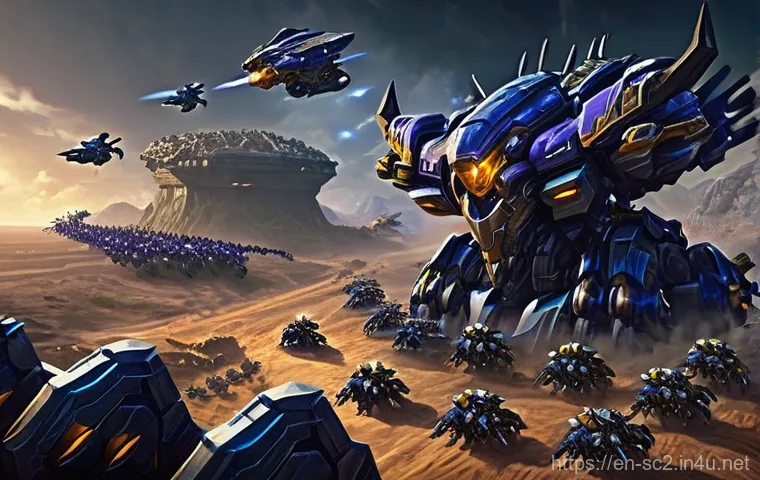
You know that feeling, right? When you’ve just built up a fantastic army, maybe a formidable bioball as Terran or a massive Zergling-Bane-Muta swarm, and you think you’re ready to roll over your opponent. Then, you A-move, and it all just… melts. I’ve been there countless times, staring at my screen in disbelief as my perfectly crafted force gets shredded by a few well-placed storms or a handful of Colossi. It’s a rude awakening, a stark reminder that StarCraft II isn’t just about building units; it’s about *controlling* them. Truly unleashing your army’s potential means going beyond the basic attack command. It’s about making each unit feel like an extension of your will, guiding them through skirmishes with surgical precision, and turning what looks like a losing engagement into a stunning victory. I remember a game recently where I was down to just a few Stalkers against a much larger force of Hydralisks. Instead of retreating, I focused entirely on blink micro, dodging hydra shots, sniping high-value targets, and kiting them endlessly. It felt like I was actually *in* the game, feeling every blink, every shot, and eventually, turning the tide with sheer mechanical skill. That’s the magic we’re chasing here, the feeling of absolute control and dominance that only comes from dedicated micro practice. It’s a grind, for sure, but the payoff? Absolutely priceless.
Understanding Unit Roles and Synergies
Every unit in StarCraft II has a specific purpose, a unique role it plays in the grand scheme of your army. Knowing these roles inside and out is the first step to effective micro. For example, a Marine is your bread and butter damage dealer, but without a Marauder to tank or a Medivac to heal, they’re vulnerable. A Zergling is cheap and fast, perfect for surrounds, but they’ll get obliterated by Hellions if you don’t spread them. Understanding these fundamental interactions allows you to anticipate threats and position your units proactively. I’ve learned that a key part of micro isn’t just reacting, but setting up situations where your units naturally excel. It’s like choreographing a battle before it even begins, knowing exactly where each dancer needs to be to hit their mark.
Maximizing Efficiency with Hotkey Groups
If you’re still clicking on individual units or dragging selection boxes in the middle of a heated battle, we need to talk. Hotkeys are your best friends. Seriously, they are the backbone of any serious micro player. Grouping your units effectively allows you to issue commands instantly without ever looking away from the action. I personally use different hotkey groups for my main army, spellcasters, air units, and even specific high-value units like Vipers or Disruptors. Setting up your hotkeys in a way that feels natural and intuitive to *you* is crucial. Don’t just copy a pro player’s setup; experiment and find what works for your hands and brain. The muscle memory you build with consistent hotkey usage will feel like a superpower, turning complex multi-unit maneuvers into second nature.
The Dance of Precision: Hotkeys Aren’t Just for Pros
Alright, let’s get real about hotkeys. For a long time, I thought hotkeys were just for the pros, those insane players whose fingers fly across the keyboard like they’re playing a piano concerto. I’d watch replays and wonder how they managed to cast spells, move different units, and build expansions all at the same time. The truth is, hotkeys are for *everyone* who wants to get better, and ignoring them is like trying to drive a car with one hand tied behind your back. The moment I committed to really learning and customizing my hotkeys, my game changed overnight. It wasn’t just about being faster; it was about being more *precise*. Instead of fumbling with mouse clicks, I could instantly select my Medivacs to heal, my Ghosts to snipe, or my Infestors to fungal. This immediate responsiveness is what separates the good plays from the truly game-winning ones. It’s an investment, absolutely, in terms of initial awkwardness, but the return on that investment is astronomical. Trust me, dedicating time to perfect your hotkey setup is the single best thing you can do for your micro. It brings a level of comfort and control that feels almost unfair against players who are still clicking everything.
Customizing Your Command Center
One of the beauties of StarCraft II is the sheer depth of customization available. Your hotkey setup shouldn’t be a generic copy-paste. Think about what feels most natural to you. Do you prefer grid hotkeys? Or maybe a more traditional setup? Personally, I’ve tinkered with my hotkeys so much over the years, adjusting them for specific unit compositions or even just for comfort as my playstyle evolves. For example, I moved my major spellcaster abilities to keys that are easily reachable with my left hand, so I don’t have to stretch or disrupt my main army movement. This seemingly small change has made a huge difference in my ability to execute complex spell combinations under pressure. Don’t be afraid to experiment, and remember that your hotkey setup is a living thing, ready to be molded to fit your ever-improving skills.
Practicing Reflexive Hotkey Usage
Knowing your hotkeys is one thing; using them reflexively is another. The only way to achieve that lightning-fast execution is through deliberate practice. Custom games are your best friend here. Load up a map, spawn some units, and just practice using their abilities with hotkeys, over and over again. Try different scenarios: splitting Marines against Banelings, blinking Stalkers away from a siege line, or dropping Warp Prisms and warping in units. The goal is to build muscle memory so strong that you don’t even have to think about which key to press. It should become an extension of your thought process, as natural as breathing. The initial frustration will be real, but push through it. That feeling when a perfect blink or an on-point fungal growth comes out without a second thought? Absolutely worth it.
Beyond the Click: Situational Awareness and Strategic Micro
Micro isn’t just about making your units dance; it’s about making them dance in the *right* way, at the *right* time. This is where situational awareness truly shines, elevating your micro from mere mechanics to strategic genius. I’ve seen so many players, myself included in the past, get tunnel vision, focusing intensely on one small engagement while ignoring the broader battlefield. That’s a recipe for disaster. Effective micro integrates seamlessly with your overall strategy. It means knowing when to commit to a fight, when to disengage and kite, and when to sacrifice a few units to save your main force. It’s about reading the enemy’s movements, anticipating their spell casts, and positioning your units to counter their threats before they even materialize. This holistic approach to micro feels less like a series of isolated actions and more like a fluid conversation with the game itself, constantly adapting and reacting to the unfolding narrative of the battle. It’s the moment you realize that winning isn’t just about out-clicking your opponent, but out-thinking them at every turn.
Reading the Opponent’s Intentions
One of the most impactful things I’ve learned about micro is that it often starts before the actual engagement. By observing your opponent’s army composition, their unit positioning, and even their prior tendencies, you can often predict what they’re trying to achieve. For instance, if you see a Protoss player marching a few High Templar towards your Marine-Marauder force, you *know* Psionic Storms are coming. This pre-computation allows you to prepare your splits, pre-spread your units, or have your Ghosts ready for EMPs. It’s like playing a game of chess, but in real-time, where every unit is a piece with unique movement and attack patterns. The more you play and analyze, the better you become at recognizing these patterns and reacting almost instinctively.
Target Priority and Focus Fire
Not all units are created equal, especially in a heated battle. Knowing which units to prioritize and focus fire can dramatically swing an engagement. Should you target the enemy’s Medivacs to cripple their healing? Or go for the High Templar to prevent devastating spell casts? Perhaps the Colossus that’s melting your light units? This decision-making process, often made in milliseconds, is a hallmark of skilled micro. I’ve found that having a clear target priority in mind *before* the fight even starts helps immensely. For Terran, it’s often Medivacs first, then spellcasters. For Zerg, it might be focusing down critical air units or splash damage dealers. This isn’t just about clicking fast; it’s about clicking *smart*.
The Psychological Edge: Maintaining Composure Under Fire
Let’s be honest, StarCraft II can be incredibly stressful. The screen explodes with units, spells fly everywhere, and your APM starts to feel inadequate as your heart pounds in your chest. In these chaotic moments, maintaining your composure is absolutely critical for effective micro. I’ve had countless games where I started strong, only to completely fall apart under pressure, letting my units get picked off one by one because I panicked. It’s a common pitfall, and one that separates the consistently great players from those who have flashes of brilliance but lack stability. The mental game is just as important, if not more important, than the mechanical game. Learning to breathe, to stay calm, and to trust your training when the stakes are highest is a skill that translates far beyond StarCraft II, believe me. It’s about building a mental fortress that can withstand the most intense assaults, allowing your fingers to execute what your mind commands, rather than succumbing to the overwhelming chaos.
Dealing with Tilt and Frustration
Tilt is real, and it can absolutely sabotage your micro. That moment when you lose an army you thought was invincible, or a crucial spell misses, and you feel that wave of frustration wash over you? That’s tilt knocking at your door. Recognizing it is the first step to combating it. I’ve found that taking a quick, deep breath, or even a micro-break (literally just a second or two to clear your head) can make a huge difference. Sometimes, it’s about acknowledging the mistake, learning from it, and immediately refocusing. Don’t dwell on what went wrong; focus on what you can do *next*. It’s a skill that develops over time, and honestly, the ladder is the best training ground for it. Every loss is a lesson in managing your emotions.
Developing a Calm and Focused Mindset
A calm mind is a powerful mind, especially in StarCraft II. Cultivating a focused mindset involves more than just reacting to in-game situations; it’s about preparation. Before I even queue for a ladder game, I try to take a moment to clear my head, review my build order, and mentally prepare for the intensity. During the game, I consciously try to avoid distractions, whether it’s checking a second monitor or getting caught up in chat. It’s about being fully present in the moment, allowing your instincts and trained reflexes to take over. This kind of mental discipline not only improves your micro but also enhances your overall strategic decision-making, leading to more consistent and enjoyable gameplay.
Drills That Actually Deliver: Putting Practice into Action
You can read all the guides in the world, watch every pro replay, and analyze every unit interaction, but nothing, and I mean *nothing*, replaces actual practice. Just like a musician practices scales or an athlete trains their specific movements, StarCraft II micro needs deliberate, focused drills. I used to just jump onto the ladder, hoping to magically get better, but that approach led to slow, frustrating progress. It wasn’t until I started incorporating specific custom game drills into my routine that I truly saw an acceleration in my mechanical skill. These aren’t always the most exciting things to do, and sometimes they feel monotonous, but the improvement is undeniable. It’s about breaking down complex micro scenarios into smaller, manageable chunks and repeating them until they become second nature. This kind of systematic training builds a robust foundation that you can rely on even in the most chaotic, high-pressure situations. Don’t just play games; *train* for them. The feeling of executing a perfect split or a flawless spell combo in a real game, knowing you drilled it hundreds of times, is incredibly satisfying.
Dedicated Custom Game Scenarios
There are fantastic custom maps available that are specifically designed to hone your micro. Maps like “Darglein’s Micro Trainer” or “Marine Split Challenge” are invaluable resources. They throw you into specific scenarios – Baneling splits, Force Field placements, Blink Stalker maneuvers – and allow you to practice them repeatedly without the pressure of a full game. I’ve spent hours on these maps, and I can tell you firsthand, the improvement is palpable. It’s like a gym for your fingers and your brain, allowing you to isolate and strengthen specific mechanical muscles.
Replay Analysis with a Micro Focus
Beyond active drilling, passively learning from replays is a goldmine. Don’t just watch pros win; analyze *how* they micro. Pause the game, slow it down, and observe their hotkey usage, their unit positioning, their target prioritization. But more importantly, watch *your own* replays. Be brutally honest with yourself. Where did your units clump? When did you miss a crucial spell? Where could you have moved more efficiently? I’ve found that watching my own losses, specifically through the lens of micro, provides incredibly actionable insights that I can immediately take into my next training session. It’s a feedback loop that continually refines your understanding and execution.
The Strategic Layer: Why Micro Isn’t Just for Skirmishes
Micro is often thought of as purely tactical, something that happens during small engagements. But honestly, that’s a narrow view. True mastery of micro extends far beyond skirmishes; it’s deeply intertwined with your overall strategic game. A strong micro foundation allows for more aggressive map control, safer expansions, and more efficient harassment. Think about it: if you know you can reliably split your Marines against Banelings, you can push further onto the map with less fear. If your Stalkers can perfectly blink into and out of danger, you can scout more aggressively or apply more consistent pressure. This isn’t just about winning fights; it’s about winning the entire game through a series of micro-enabled advantages. It allows you to take calculated risks that less mechanically sound players simply can’t afford, expanding your strategic toolkit significantly. It’s a feeling of liberation, really, knowing that your units will respond exactly as you command, freeing up your mental energy to focus on the grander strategic objectives.
Micro as a Tool for Map Control
Effective micro can be a powerful instrument for gaining and maintaining map control. Units that are skillfully microed can push further, hold choke points more effectively, and deny enemy expansions with greater resilience. For example, a few well-controlled Zerglings can scout enormous portions of the map and harass undefended expansions, tying up an opponent’s resources and attention. Similarly, a small group of bio units, if microed perfectly, can be incredibly annoying to deal with, forcing defensive reactions from your opponent and creating space for you to expand or tech up. It’s about leveraging every unit’s potential to assert dominance across the entire battlefield, not just in isolated engagements.
Economic Impact of Efficient Micro
Believe it or not, good micro has a direct impact on your economy. Fewer lost units mean less money spent on replacements, freeing up resources for tech upgrades, more production, or additional expansions. Think of how much money you save if your Medivac pulls back damaged units just in time, or if your Mutalisks effectively harass mineral lines without being shot down. These small efficiencies add up over the course of a game, creating a compounding advantage that can be difficult for an opponent to overcome. It’s not just about winning the fight; it’s about winning the fight *cost-effectively*, ensuring your economy keeps churning while your opponent struggles to recover.
Unit-Specific Shenanigans: Unlocking Unique Abilities
StarCraft II is a game brimming with unique unit abilities, and mastering these often requires very specific micro techniques. It’s not enough to just know what an ability does; it’s about knowing *when* and *how* to use it for maximum impact. From the terrifying Psionic Storms of the High Templar to the disruptive Graviton Beams of the Phoenix, each ability adds a layer of complexity and opportunity to your micro game. I’ve spent countless hours in custom games, just practicing these specific abilities, trying to find the perfect timing and placement. There’s an incredible satisfaction in landing a perfect fungal growth on a clump of Marines, or using a well-timed Yamato Cannon to snipe a crucial unit. It feels like you’re playing a completely different game when you can seamlessly weave these unique abilities into your general army movements, turning ordinary engagements into highlight-reel moments. This is where your true creativity in micro can shine, finding those unexpected angles and devastating combinations that catch your opponent completely off guard.
Mastering Spellcasters for Maximum Impact
Spellcasters are arguably the most micro-intensive units in the game, but their impact can be utterly game-changing. High Templar with Psionic Storms, Ghosts with EMP and Snipe, Infestors with Fungal Growth and Neural Parasite, Vipers with Abduct and Blinding Cloud – each offers powerful crowd control or damage potential that can turn the tide of battle. The key is precise positioning and perfect timing. I always try to keep my spellcasters on a separate hotkey group so I can quickly select them and cast their abilities without interrupting my main army’s movement. Practice makes perfect here; the more you use these abilities, the more intuitive their deployment becomes, transforming you into a true maestro of destruction.
Utilizing Specialized Unit Abilities
Beyond spellcasters, many combat units have unique abilities that, when microed effectively, can provide significant advantages. Think of the Siege Tank’s Siege Mode for area denial, the Raven’s Auto Turrets or Interference Matrix for harassment and disruption, or the Hellion’s Inferno Pre-igniter for burst damage against light units. Learning to seamlessly integrate these abilities into your broader micro strategy elevates your gameplay. It’s not just about raw damage; it’s about control, zone denial, and creating tactical opportunities. I personally love using the Raven’s Interference Matrix on an enemy Siege Tank just as they’re about to set up a defensive line; it throws off their entire timing and can open up a clear path for an attack.
| Race | Essential Micro Techniques | Key Units for Micro Focus |
|---|---|---|
| Terran | Marine splits, Medivac drops/healing, Ghost EMPs/snipes, Tank sieging/unsieging | Marines, Medivacs, Ghosts, Siege Tanks |
| Protoss | Stalker blinks, Sentry Force Fields, High Templar Psionic Storms/Feedback, Disruptor purification novas | Stalkers, Sentries, High Templar, Disruptors |
| Zerg | Zergling/Baneling spreads, Mutalisk magic box/harassment, Infestor Fungal Growth/Neural Parasite, Viper Abduct/Blinding Cloud | Zerglings, Banelings, Mutalisks, Infestors, Vipers |
Learning from the Legends: How Pros Elevate Their Game
One of the absolute best ways to improve your micro isn’t just to play, but to watch and learn from the very best. I’ve spent countless hours poring over pro replays and watching live tournaments, not just to see who wins, but to meticulously analyze *how* they play. It’s like having a master class at your fingertips, showing you intricate moves and decision-making processes that you might never discover on your own. What you’ll notice isn’t just their speed, but their efficiency and foresight. They seem to know exactly where every unit needs to be, and their execution is flawless, even under immense pressure. It’s inspiring, frustrating, and incredibly educational all at once. Mimicking their movements and thought processes, even on a smaller scale, can significantly accelerate your own journey to micro mastery. Don’t just admire their skill; dissect it, understand it, and try to replicate it in your own practice sessions.
Deconstructing Pro Replays
When you watch a pro replay, don’t just passively observe. Be an active student. Focus on specific engagements. How do they split their units? When do they cast their spells? What’s their target priority? Pay attention to the hotkey usage and camera movements. Often, pausing the replay at critical moments and analyzing the unit positioning and enemy threats can reveal incredible insights. I’ve personally picked up so many subtle tricks, like specific angles for Disruptor shots or unexpected ways to use a Phoenix’s Graviton Beam, just by carefully dissecting pro matches. It’s like peeking into the minds of the masters.
Emulating Legendary Micro Plays
Once you’ve identified a particularly impressive micro play, don’t just admire it – try to *do* it yourself. Load up a custom game, spawn the relevant units, and attempt to replicate that exact scenario. It might take dozens, even hundreds, of attempts, but the process of actively trying to mimic a pro’s execution is an incredibly effective learning tool. It builds muscle memory, refines your understanding of unit interactions, and ultimately instills a level of confidence that only comes from successful execution. It’s like learning a complex dance move; you watch the pro, break it down, and then practice it until it flows naturally.
The Evolution of Micro: Adapting to Patches and Metas
StarCraft II is a living, breathing game. Blizzard is constantly releasing new patches, adjusting unit stats, introducing new abilities, and shaking up the meta. What was considered optimal micro last month might be completely outdated this month. This constant evolution means that your micro journey is never truly “over.” It’s a continuous process of learning, adapting, and refining your skills to match the current landscape of the game. I remember when the Swarm Host was changed, completely altering Zerg siege micro, or when specific Medivac boosts were tweaked, forcing Terran players to re-evaluate their drops. Staying on top of these changes isn’t just about reading patch notes; it’s about actively experimenting and seeing how these adjustments impact your unit interactions and, consequently, your micro decisions. It’s a challenge, but also what keeps the game fresh and engaging.
Staying Current with Patch Notes
This might sound obvious, but reading the official patch notes is absolutely crucial. These notes detail every unit change, ability tweak, and balance adjustment that affects the game. Understanding these changes is the first step in adapting your micro. A small attack damage buff to a key unit, or a slight cooldown reduction on a spell, can completely alter its effectiveness and how you should micro it. I always make it a point to go through these notes as soon as they drop, trying to envision how they’ll impact my matchups and unit compositions. It’s like getting a heads-up on the rules of the game before anyone else.
Experimentation in Custom Games
Reading about changes is one thing; experiencing them firsthand is another. After a significant patch, I always jump into custom games or even low-stakes ladder matches to experiment with the new changes. How does the tweaked Viper ability feel? Does the new unit buff actually make a difference in head-to-head engagements? This hands-on experimentation allows you to quickly internalize the impact of patches and adjust your micro strategies accordingly. It’s about building a new mental database of how units interact under the updated rules, ensuring your muscle memory evolves alongside the game itself.
Wrapping Things Up
Whew! We’ve covered a lot, haven’t we? From the nitty-gritty of unit control to the mental fortitude it takes to pull off those insane plays, micro is truly the heart and soul of StarCraft II. It’s what transforms a generic army into a precision instrument, allowing you to dance through engagements and emerge victorious against all odds. I truly believe that embracing the challenge of micro isn’t just about climbing the ladder; it’s about finding a deeper appreciation for the game’s incredible depth and rewarding complexity. Every blink, every split, every perfectly timed spell adds another layer of satisfaction to your gameplay. So, keep practicing, keep learning, and most importantly, keep having a blast as you unlock your army’s true potential!
Handy Tips for Your Micro Journey
1. Dive into Custom Micro Maps: Seriously, these are game-changers. Maps like “Darglein’s Micro Trainer,” “Marine Split Challenge,” and “Knalle Micro Map” are specifically designed to hammer home essential micro skills in a low-pressure environment. I’ve spent countless hours on them, and they’ve sharpened my reflexes and decision-making like nothing else. Think of them as your personal StarCraft II gym.2. Hotkeys are Your Superpower – Personalize Them! Don’t just stick with the default if it doesn’t feel right. Experiment with different hotkey layouts until you find what clicks for *you*. Muscle memory is everything, and a comfortable setup means faster, more accurate commands. I’ve tweaked mine over the years, moving spellcasters to easily accessible keys, and it’s made a world of difference in executing complex plays under pressure.3. Become a Replay Detective: Watching pro replays is awesome, but don’t stop there. Go back and watch *your own* games, especially your losses. Look for those moments where your micro faltered. Did you clump your Marines? Miss an EMP? Analyze what went wrong, then jump into a custom game and drill that specific scenario. It’s the fastest way to turn mistakes into learning opportunities.4. Balance Micro with Macro (Especially Early On): While micro is incredibly fun, remember that solid macro is often the foundation of victory. Don’t let your desire for flashy micro distract you from consistently building workers, expanding, and spending your money. A huge, well-macroed army with decent micro will almost always beat a small, perfectly microed one. Find that sweet spot.5. Stay Tuned to the Meta and Patch Notes: StarCraft II is constantly evolving! Unit stats change, new strategies emerge, and what was dominant last month might be obsolete tomorrow. Keep an eye on the official patch notes and watch pro games to see how the best players are adapting. This helps you understand the current power dynamics and adjust your micro strategies accordingly, keeping you ahead of the curve.
Key Takeaways
Ultimately, truly mastering StarCraft II micro boils down to a few core principles. First, relentless, focused practice is non-negotiable; those custom maps are your best friends. Second, hotkey mastery and personalized setups will dramatically increase your execution speed and precision. Third, always cultivate strong situational awareness, linking your micro decisions to your broader strategic goals. Finally, and perhaps most importantly, develop the mental fortitude to stay calm under pressure, learning from every mistake, and trusting in your cultivated skills. The journey is challenging, but the feeling of executing a perfect play is an unparalleled reward that makes every moment of effort absolutely worth it.
Frequently Asked Questions (FAQ) 📖
Q: s and answers, focusing on the persona and guidelines.I will formulate 3 questions and answers.Question 1 Idea: General advice for improving micro, incorporating practice methods and mindset.
A: nswer 1 Focus: Hotkeys, control groups, custom maps/drills, consistent practice, mental resilience, and enjoying the process. Relate it to long-term engagement.
Question 2 Idea: How to adapt to recent patch changes, specifically mentioning the Microbial Shroud as per the prompt. Answer 2 Focus: Discuss the specific Microbial Shroud changes, how it impacts Zerg defense and matchups, and how players can adjust their micro and strategy.
Also touch on other relevant patch changes for Terran (Siege Tank abduct immunity) and Protoss (Dark Templar Blink delay, Psionic Storm changes) to show broader awareness.
Question 3 Idea: Specific micro tips for common units across different races (Terran Marines, Protoss Stalkers, Zerg Banelings/Vipers) to cater to a broader audience.
Answer 3 Focus: Actionable tips for Marine splits, Stalker blinks, and maybe Baneling pathing or Viper abducts, with personal experience and emphasis on timing and precision.
Now, let’s draft the content, keeping in mind the human-like tone, EEAT, and no markdown/code blocks. I need to be careful with the formatting and ensure the Q&A structure is followed exactly, using bolding for Q and A.
Here’s my plan for the responses:
Q: I feel like my micro is holding me back, but I don’t know where to start. What’s the absolute best way to consistently improve my unit control in StarCraft II?
A: This is a classic question, and honestly, it’s where so many players get stuck! I’ve been there myself, staring at replays wondering why my units just melted.
The absolute best way to consistently improve your micro isn’t some secret trick, it’s focused, deliberate practice, almost like hitting the gym for your fingers and brain!
First off, you have to master your hotkeys and control groups. I know it sounds basic, but trust me, having your production facilities on one group, your main army on another, and your spellcasters easily accessible is game-changing.
There are some fantastic custom maps out there, like ‘Marine Split Challenge’ or ‘Dargleins Micro Trainer,’ that let you drill specific scenarios without the pressure of a full game.
My personal tip? Start with just 15-20 minutes of these drills before you even hit the ladder. You’ll be surprised how quickly those reflexes become second nature.
I remember when I first started diligently practicing my Marine splits, it felt clunky and slow, but after a few weeks, I was dodging Banelings like a pro!
It’s all about building that muscle memory. And hey, the more you feel in control of your units, the more fun you’ll have, which means you’ll play longer, and that’s a win-win for everyone!
Q: The meta seems to be shifting constantly with these new patches! How do I adapt my micro to stay on top, especially with recent changes like the Zerg Microbial Shroud?
A: Oh, tell me about it! Just when you think you’ve got things figured out, Blizzard drops a new patch and it’s back to the drawing board! It can feel frustrating, but this constant evolution is what keeps StarCraft II so dynamic.
The recent 5.0.15 PTR updates have indeed brought some interesting twists, especially for Zerg’s Microbial Shroud. It now reduces ranged attacks by 50% damage, but the effect no longer persists for a few seconds after the unit leaves the shroud.
Plus, the cost is up to 100 energy and it requires an upgrade again. From my own games, this means Zerg players need to be way more precise with its placement and timing; you can’t just throw it down and expect units to walk out safe.
Defenders need to either stay inside the shroud or move units out instantly, making clumped units a bigger risk if they leave it. For Terran, the fact that Siege Tanks can no longer be abducted in siege mode is a huge deal.
As a Zerg player myself, I used to love snagging those tanks with Vipers! Now, you’ve got to find other ways to break those Terran siege lines, perhaps relying more on Blinding Clouds or flanking maneuvers.
And for Protoss, those Dark Templar Blink attack delay reductions are spicy, meaning they can be even more slippery in engagements. The key to adapting, I’ve found, is to treat each patch like a new puzzle.
Read the notes, watch pro players experiment, and most importantly, get into custom games or unranked ladder to feel out the changes yourself. Don’t be afraid to try new approaches – sometimes the “wrong” way before a patch becomes the “right” way after.
It’s all about staying curious and flexible!
Q: I play all three races and love specific unit micro. Can you give me a few quick, impactful tips for Terran Marine splits, Protoss Stalker blinks, and Zerg Viper abducts?
A: Absolutely! Getting those iconic micro plays down feels incredibly satisfying, doesn’t it? It’s like landing a perfect combo.
For Terran Marine splits, my go-to is always anticipating the opponent’s splash damage, especially Banelings or High Templar Storms. The trick is to quickly drag-select small groups of Marines away from the main clump before the splash hits.
You want to aim for 2-3 small groups rather than one big blob. I’ve found that practicing against Banelings on custom maps where they just charge at you is super effective.
It builds that instant reaction time. Don’t just A-move and hope for the best; a well-executed split can turn a losing fight into a win. With Protoss Stalker blinks, it’s less about splitting and more about positioning and preserving HP.
My best advice here is to use Blink to reposition damaged Stalkers to the back of your army mid-fight, letting the healthier ones tank damage. And here’s a cool one I picked up: when blinking up or down ramps, issue an A-move command near the ramp, then immediately a shift-Blink command to the desired location, followed by another shift-move command further away.
This helps ensure all your Stalkers blink up or down efficiently without blocking each other. Trust me, I’ve lost count of how many times I’ve saved a critical mass of Stalkers by microing them out of danger.
As for Zerg Viper abducts, this one feels so impactful when you nail it! It’s all about isolating high-value targets like Siege Tanks, Colossi, or Thors and dragging them into the waiting jaws of your army.
Since Siege Tanks can’t be abducted in siege mode anymore, you need to be smart. Target tanks that are unsieged or focus on other key units. My tip?
Practice hitting those abducts on the edge of the Viper’s range. It gives the opponent less time to react. I always try to set up a control group for my Vipers, separate from my main army, so I can snap to them and cast Abduct with precision.
The satisfaction of snatching a key unit and watching your Zerglings tear it apart? Priceless!
Q: I feel like my micro is holding me back, but I don’t know where to start. What’s the absolute best way to consistently improve my unit control in StarCraft II?
A: This is a classic question, and honestly, it’s where so many players get stuck! I’ve been there myself, staring at replays wondering why my units just melted.
The absolute best way to consistently improve your micro isn’t some secret trick, it’s focused, deliberate practice, almost like hitting the gym for your fingers and brain!
First off, you have to master your hotkeys and control groups. I know it sounds basic, but trust me, having your production facilities on one group, your main army on another, and your spellcasters easily accessible is game-changing.
There are some fantastic custom maps out there, like ‘Marine Split Challenge’ or ‘Dargleins Micro Trainer,’ that let you drill specific scenarios without the pressure of a full game.
My personal tip? Start with just 15-20 minutes of these drills before you even hit the ladder. You’ll be surprised how quickly those reflexes become second nature.
I remember when I first started diligently practicing my Marine splits, it felt clunky and slow, but after a few weeks, I was dodging Banelings like a pro!
It’s all about building that muscle memory. And hey, the more you feel in control of your units, the more fun you’ll have, which means you’ll play longer, and that’s a win-win for everyone!
Q: The meta seems to be shifting constantly with these new patches! How do I adapt my micro to stay on top, especially with recent changes like the Zerg Microbial Shroud?
A: Oh, tell me about it! Just when you think you’ve got things figured out, Blizzard drops a new patch and it’s back to the drawing board! It can feel frustrating, but this constant evolution is what keeps StarCraft II so dynamic.
The recent 5.0.15 PTR updates have indeed brought some interesting twists, especially for Zerg’s Microbial Shroud. It now reduces ranged attacks by 50% damage, but the effect no longer persists for a few seconds after the unit leaves the shroud.
Plus, the cost is up to 100 energy and it requires an upgrade again. From my own games, this means Zerg players need to be way more precise with its placement and timing; you can’t just throw it down and expect units to walk out safe.
Defenders need to either stay inside the shroud or move units out instantly, making clumped units a bigger risk if they leave it. For Terran, the fact that Siege Tanks can no longer be abducted in siege mode is a huge deal.
As a Zerg player myself, I used to love snagging those tanks with Vipers! Now, you’ve got to find other ways to break those Terran siege lines, perhaps relying more on Blinding Clouds or flanking maneuvers.
And for Protoss, those Dark Templar Blink attack delay reductions are spicy, meaning they can be even more slippery in engagements. The key to adapting, I’ve found, is to treat each patch like a new puzzle.
Read the notes, watch pro players experiment, and most importantly, get into custom games or unranked ladder to feel out the changes yourself. Don’t be afraid to try new approaches – sometimes the “wrong” way before a patch becomes the “right” way after.
It’s all about staying curious and flexible!
Q: I play all three races and love specific unit micro. Can you give me a few quick, impactful tips for Terran Marine splits, Protoss Stalker blinks, and Zerg Viper abducts?
A: Absolutely! Getting those iconic micro plays down feels incredibly satisfying, doesn’t it? It’s like landing a perfect combo.
For Terran Marine splits, my go-to is always anticipating the opponent’s splash damage, especially Banelings or High Templar Storms. The trick is to quickly drag-select small groups of Marines away from the main clump before the splash hits.
You want to aim for 2-3 small groups rather than one big blob. I’ve found that practicing against Banelings on custom maps where they just charge at you is super effective.
It builds that instant reaction time. Don’t just A-move and hope for the best; a well-executed split can turn a losing fight into a win. With Protoss Stalker blinks, it’s less about splitting and more about positioning and preserving HP.
My best advice here is to use Blink to reposition damaged Stalkers to the back of your army mid-fight, letting the healthier ones tank damage. And here’s a cool one I picked up: when blinking up or down ramps, issue an A-move command near the ramp, then immediately a shift-Blink command to the desired location, followed by another shift-move command further away.
This helps ensure all your Stalkers blink up or down efficiently without blocking each other. Trust me, I’ve lost count of how many times I’ve saved a critical mass of Stalkers by microing them out of danger.
As for Zerg Viper abducts, this one feels so impactful when you nail it! It’s all about isolating high-value targets like Siege Tanks, Colossi, or Thors and dragging them into the waiting jaws of your army.
Since Siege Tanks can’t be abducted in siege mode anymore, you need to be smart. Target tanks that are unsieged or focus on other key units. My tip?
Practice hitting those abducts on the edge of the Viper’s range. It gives the opponent less time to react. I always try to set up a control group for my Vipers, separate from my main army, so I can snap to them and cast Abduct with precision.
The satisfaction of snatching a key unit and watching your Zerglings tear it apart? Priceless!